The Ultimate Wall Art Placement Guide: Living Room, Bedroom & Beyond
Choosing beautiful wall art is only half the equation. The other half—the part that makes a home look “designer” instead of “thrown together”—is where you place it.
Hang a great piece too high, too small, or floating awkwardly over a sofa and the whole room feels off. Place it in the right spot, at the right height, and suddenly everything clicks.
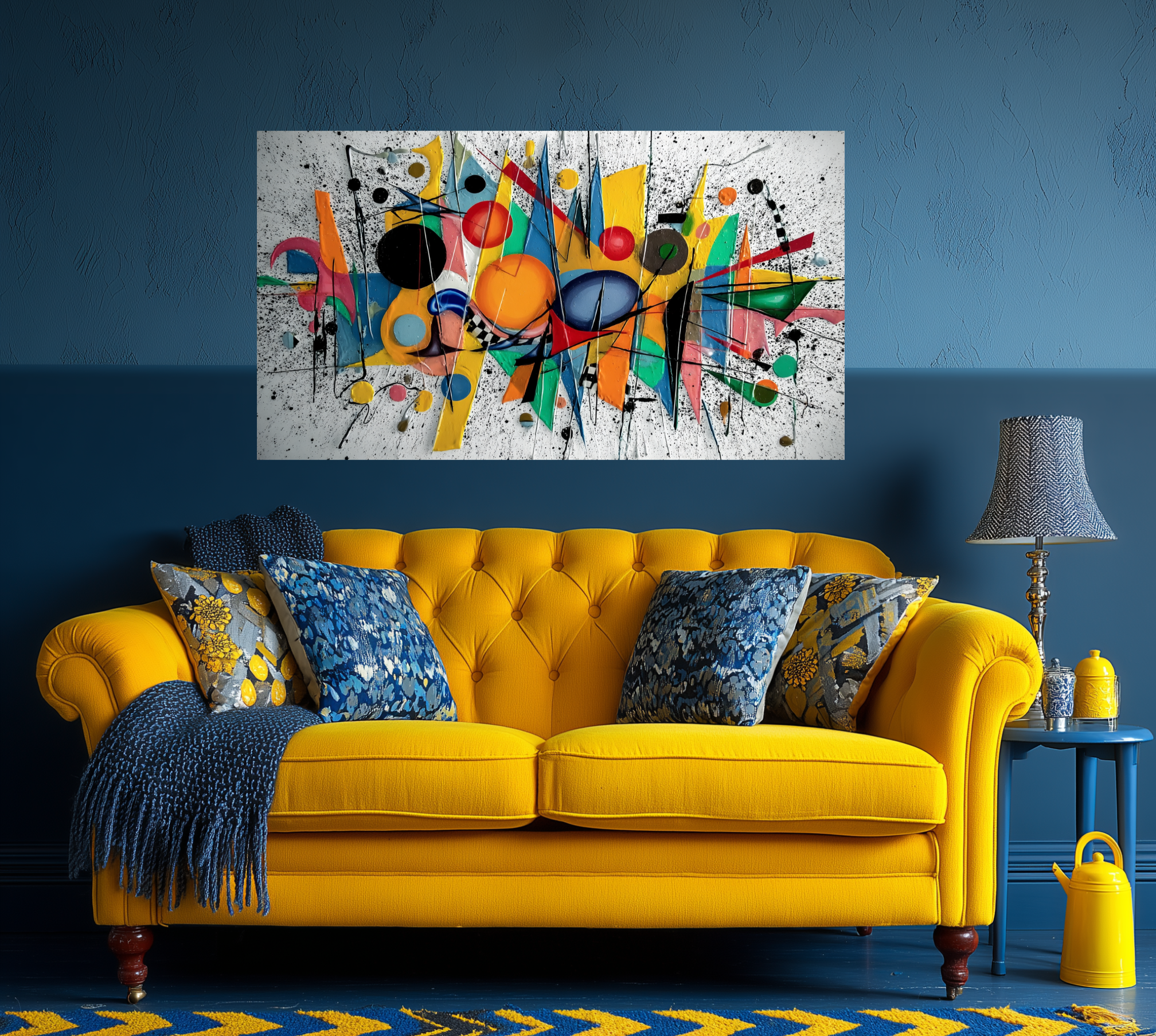
Start with the eye-level rule
Most pros start with one simple benchmark: hang artwork so the center of the piece is around 57–60 inches from the floor. That range matches standard gallery eye level and is used by museums and designers worldwide.
In a hallway, entryway, or bare wall, measure up to 57–60 inches and center your artwork there. Most people realize they’ve been hanging art too high once they try this.
Above furniture: connect art to what sits below it
The most common mistakes happen above sofas, beds, and consoles. Designers relate art directly to the furniture:
- Width: Artwork should span about two-thirds to three-quarters of the furniture’s width.
- Height above furniture: Bottom of the frame 6–10 inches above the surface.
For an 84-inch sofa → aim for art 56–63 inches wide overall. This is exactly how curators at Savage Art Prints style living room scenes: the art is visually tied to the furniture, creating one cohesive composition.
Living room: focal walls and balanced groupings
Above the sofa → One large piece or tight grouping (6–8 inches above back).
Opposite the sofa → Larger statement pieces at true eye level.
Over a media console → Slightly narrower than the console.
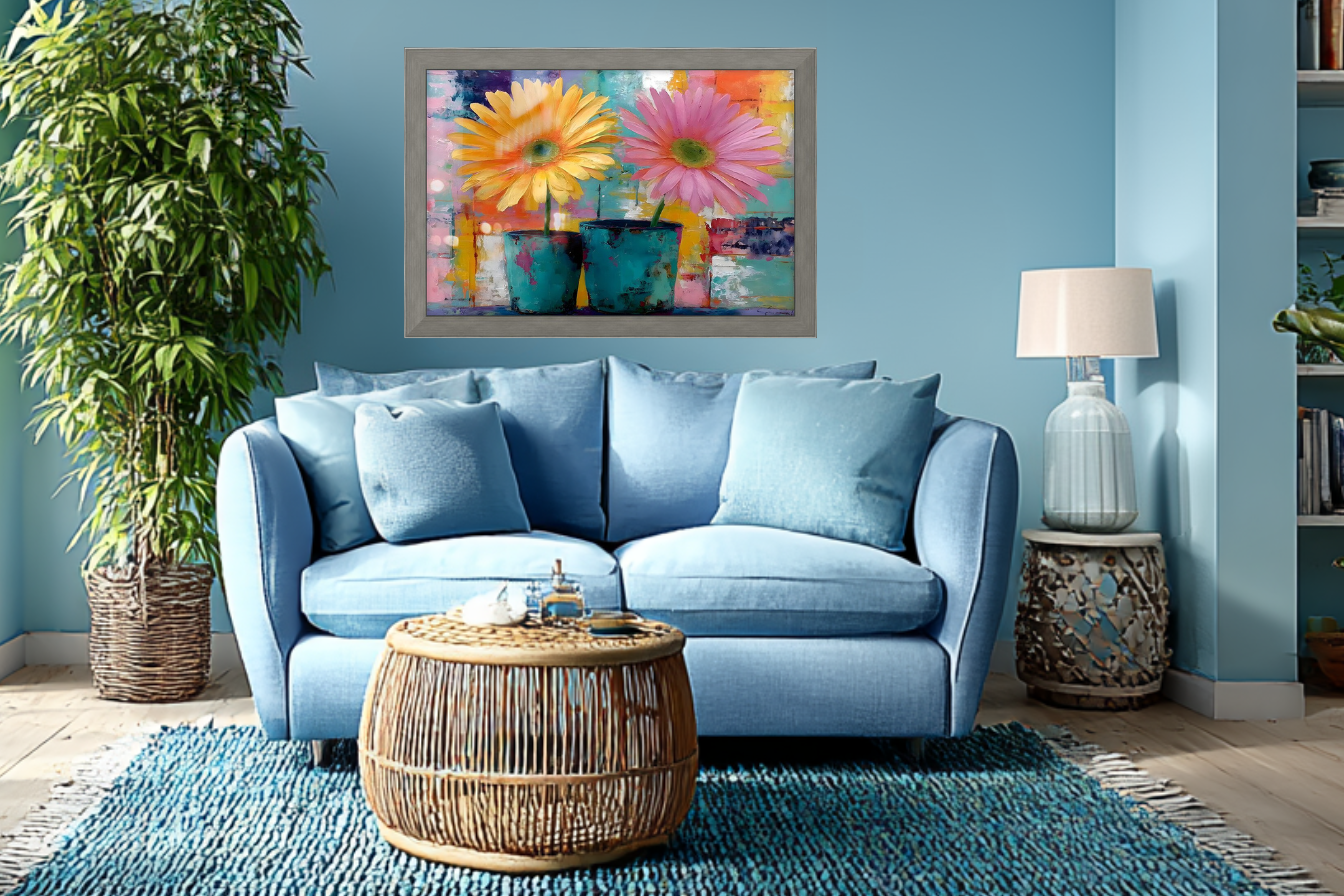
Bedroom: low, calm, and connected
Bedrooms call for softer energy:
- Art ≈ two-thirds the width of the bed
- Bottom edge 6–10 inches above headboard
- Soft abstracts and canvas textures work beautifully
Dining room: design for conversation
Hang lower than you think (seated eye level). Match width to table. Horizontal formats excel here.
Hallways, stairs & gallery walls
Hallways → Consistent 57–60 inch centers.
Stairs → Gentle rising diagonal.
Gallery walls → Treat as one unified rectangle with 2–3 inch spacing.
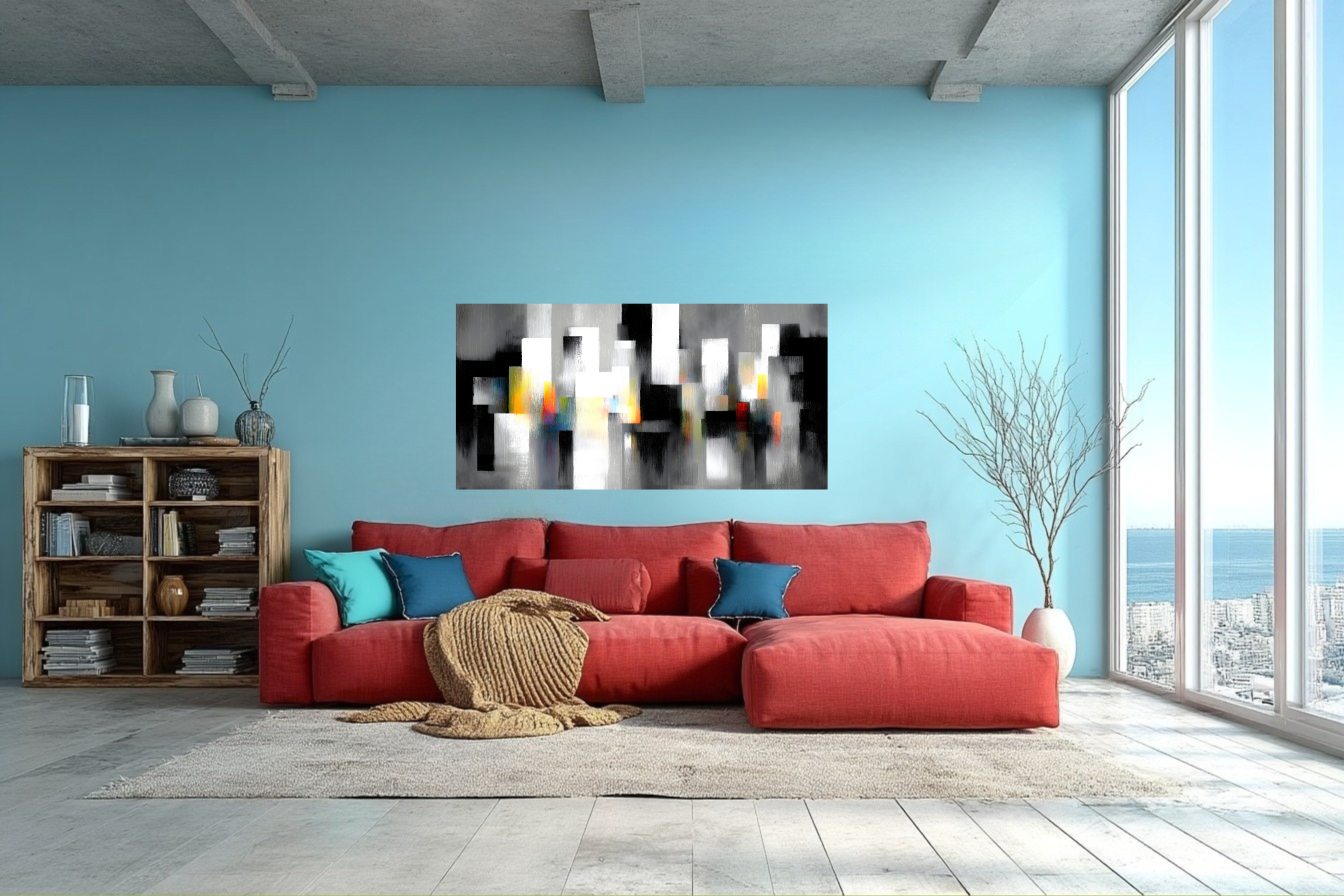
Lighting and glare considerations
Canvas handles ambient light. Metal & acrylic need controlled lighting to avoid glare. Use picture lights or adjustable LEDs to make colors pop day and night.
Summary: Your quick-reference checklist
- Center at 57–60 inches from floor
- 6–10 inches above furniture
- Two-thirds the width of what’s below
- Consistent spacing in groupings
- Choose height & energy by room function
Follow these rules and your home will instantly feel polished, intentional, and effortlessly high-end.